Why We Gather

Modern people live surrounded by constant communication, yet many have never felt more isolated from the people around them. We move through crowded stores, workplaces, and cities without truly knowing our neighbors. Families often eat separately. Friends speak through screens more often than across tables. Entire communities form and dissolve without leaving lasting obligations behind. Many people no longer belong to anything that consistently asks responsibility, participation, sacrifice, or continuity from them.

The modern world offers endless interaction, but very little rootedness.

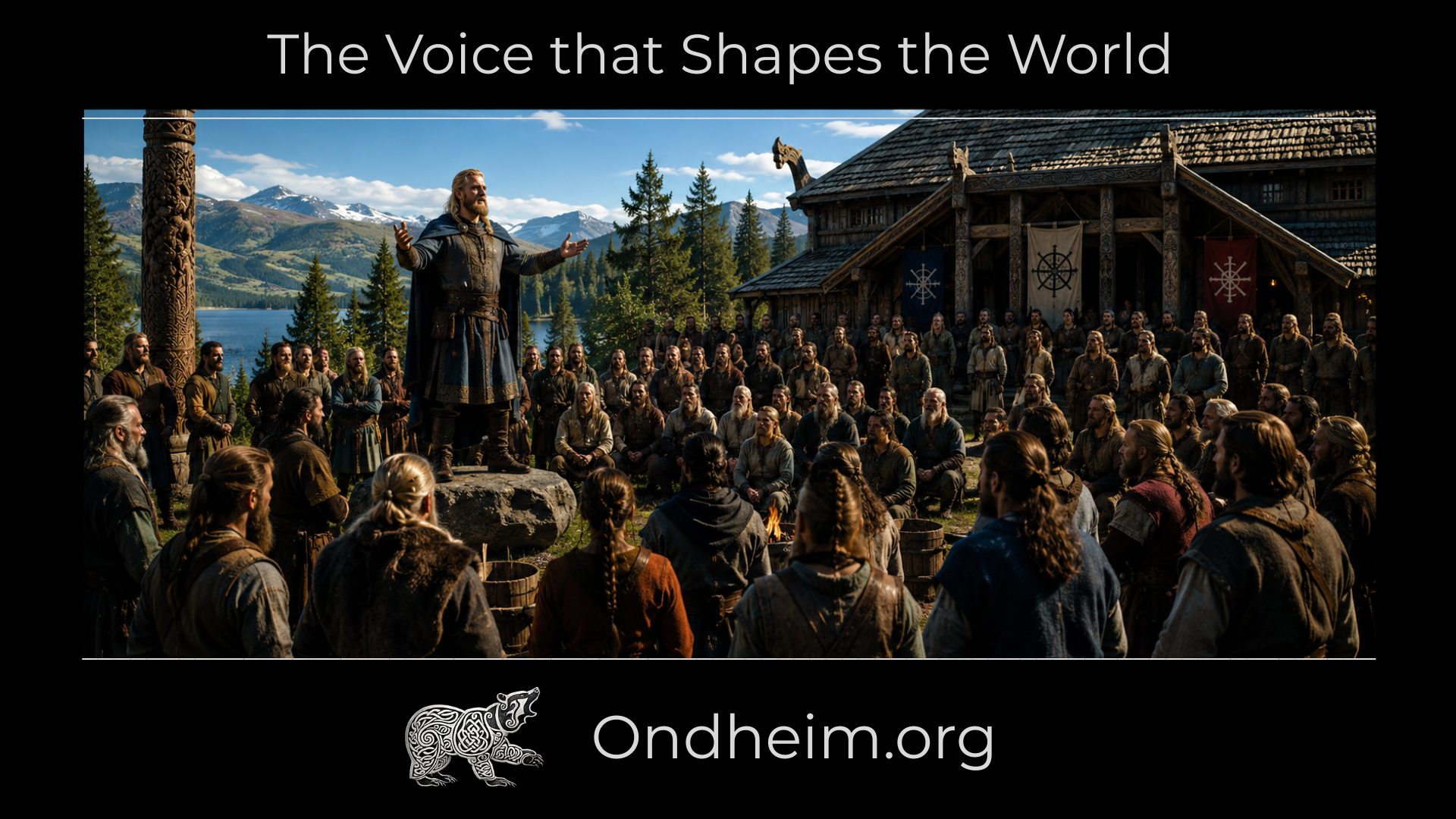
For most of human history, human beings did not live this way. People survived through tribes, households, villages, halls, assemblies, and tightly bound communities where repeated gathering was not optional social entertainment, but part of the structure that allowed a people to endure across generations. Meals were shared. Labor was shared. Rituals were shared. Stories, grief, celebration, hardship, and victory were carried collectively because survival itself depended heavily upon cooperation and continuity within the group.

A person understood who they were partly because they understood where they belonged.

Gathering therefore served practical and civilizational functions within ancestral societies. Through repeated communal meals, seasonal feasts, assemblies, rituals, and shared labor, communities transmitted memory, practical knowledge, obligation, custom, law, and identity across generations. Children learned how adults behaved. Elders remained connected to the life of the folk. Reputation formed publicly through repeated interaction. Trust developed gradually through visible conduct over time.

This pattern appears clearly throughout surviving Germanic material. In Beowulf, the hall is not important merely as architecture or scenery. What matters is what takes place there among the gathered people themselves. Warriors, leaders, households, and guests gather repeatedly to share food, exchange gifts, speak publicly, remember deeds, establish obligation, and reinforce social bonds through witnessed participation within the community.

The poem preserves recognizable patterns of communal life in which gathering together reinforced continuity and social cohesion. Speech occurred before witnesses. Reputation formed publicly. Stories preserved memory. Obligation was strengthened through repeated participation among the folk.

Modern Heathen gatherings often draw inspiration from these preserved patterns of communal life. Not because modern people imagine themselves literally recreating the world of Beowulf, but because the poem preserves recognizable examples of how communal gathering, witnessed speech, storytelling, ritual drinking, and repeated participation helped maintain continuity among a people over time.

The same principle appears historically in assemblies and þing gatherings throughout the Germanic world. People did not gather solely because it felt emotionally fulfilling to do so. Communities gathered because law, dispute resolution, alliance, trade, ritual obligation, seasonal observance, and social continuity required repeated physical participation among the people themselves.

A society cannot maintain continuity when its members exist only as isolated individuals detached from one another.

Modern society has weakened many of the older structures that once reinforced repeated communal participation. People move constantly, work in isolation, communicate digitally rather than physically, and build relationships that can disappear overnight. Convenience increasingly replaces continuity. Consumption increasingly replaces participation. Many modern gatherings revolve around distraction rather than contribution, and many people gradually become observers of life rather than active participants within enduring communities.

People watch constantly, but often build very little together.

The result is a growing sense of rootlessness. Many people hunger for belonging while simultaneously resisting the obligations that meaningful belonging requires. They desire connection without sacrifice, acceptance without accountability, and identity without participation. Yet real community has never functioned that way.

A meaningful gathering is not simply a group of people occupying the same physical location temporarily. It develops gradually through consistency, contribution, mutual obligation, repeated interaction, and shared experience carried across time. Trust is not declared instantly into existence. It forms slowly through reliability, visible conduct, and continued participation within the life of the group itself.

This is one reason ritual and tradition matter so deeply within enduring communities.

Ritual creates repeated actions filled with shared meaning. Traditions connect the living not only to one another, but also to those who came before them and those who will inherit what is preserved afterward. Seasonal holy tides, shared meals, gatherings around fires, ancestor remembrance, storytelling, ritual drinking, music, and repeated communal observance all help reinforce forms of continuity that modern life often neglects or fragments.

These practices are not simply exercises in nostalgia.

They answer longstanding human needs tied directly to memory, continuity, obligation, and social rootedness.

Over time, repeated gathering changes people. Relationships deepen. Shared memories accumulate. Children grow into adults within the presence of familiar faces. Elders pass on stories, warnings, skills, and expectations shaped through lived experience. Grief is carried collectively rather than privately. Obligations become real because they are repeatedly witnessed by others who remain present across years rather than moments.

Human beings leave parts of themselves behind in communities where life is lived honestly together over long periods of time.

This continuity matters because a people without shared memory eventually loses coherence. Without repeated gathering, stories disappear, obligations weaken, customs fade, and identity slowly fragments into isolated individual experience detached from larger continuity.

Repeated gathering helps prevent this fragmentation by reinforcing memory through participation itself.

Over time, people begin understanding themselves not merely as isolated individuals pursuing personal fulfillment, but as members of something extending backward through earlier generations and forward toward those who will eventually inherit what the present generation preserves or neglects.

This is one reason gathering carries meaning deeper than social convenience alone.

Gathering reminds people that they are not alone in the world. It teaches responsibility toward others. It allows wisdom, memory, and expectation to move between generations. It transforms strangers into companions and, over time, companions into kin through repeated participation, obligation, and shared experience.

A culture survives when its people continue gathering together in meaningful ways across time.

In an age increasingly defined by fragmentation, distraction, impermanence, and shallow connection, the deliberate act of gathering regularly with intention may remain one of the most important things a people can still do to preserve continuity, memory, and human rootedness across generations.

— William Lord
Ondheim Theodish Fellowship
Ondheim.org

Frith defines the boundary, oaths bind the word, kin carry obligation, and the hall holds witness and memory. The shape of obligation gives these structure, and through symbel they are spoken into wyrd and given force.

For additional primary sources and public-domain texts related to kinship, obligation, feud, and Germanic social structure, see our Links page.
Symbel: Where Words Are Tested

Modern people often speak as though words carry little lasting consequence. Promises are made casually. Declarations are thrown into the air and forgotten days later. Opinions shift constantly without embarrassment or accountability. Speech is often treated as temporary, detached from obligation, memory, reputation, or future burden.

The older worldview approached speech very differently.

Words revealed the speaker because they exposed judgment, restraint, maturity, loyalty, ambition, honesty, and character over time. More importantly, words spoken publicly before witnesses created social consequence. Once remembered by the community, speech no longer belonged solely to the individual who uttered it. It became tied to reputation, expectation, and future accountability within the folk itself.

This understanding stands near the center of symbel.

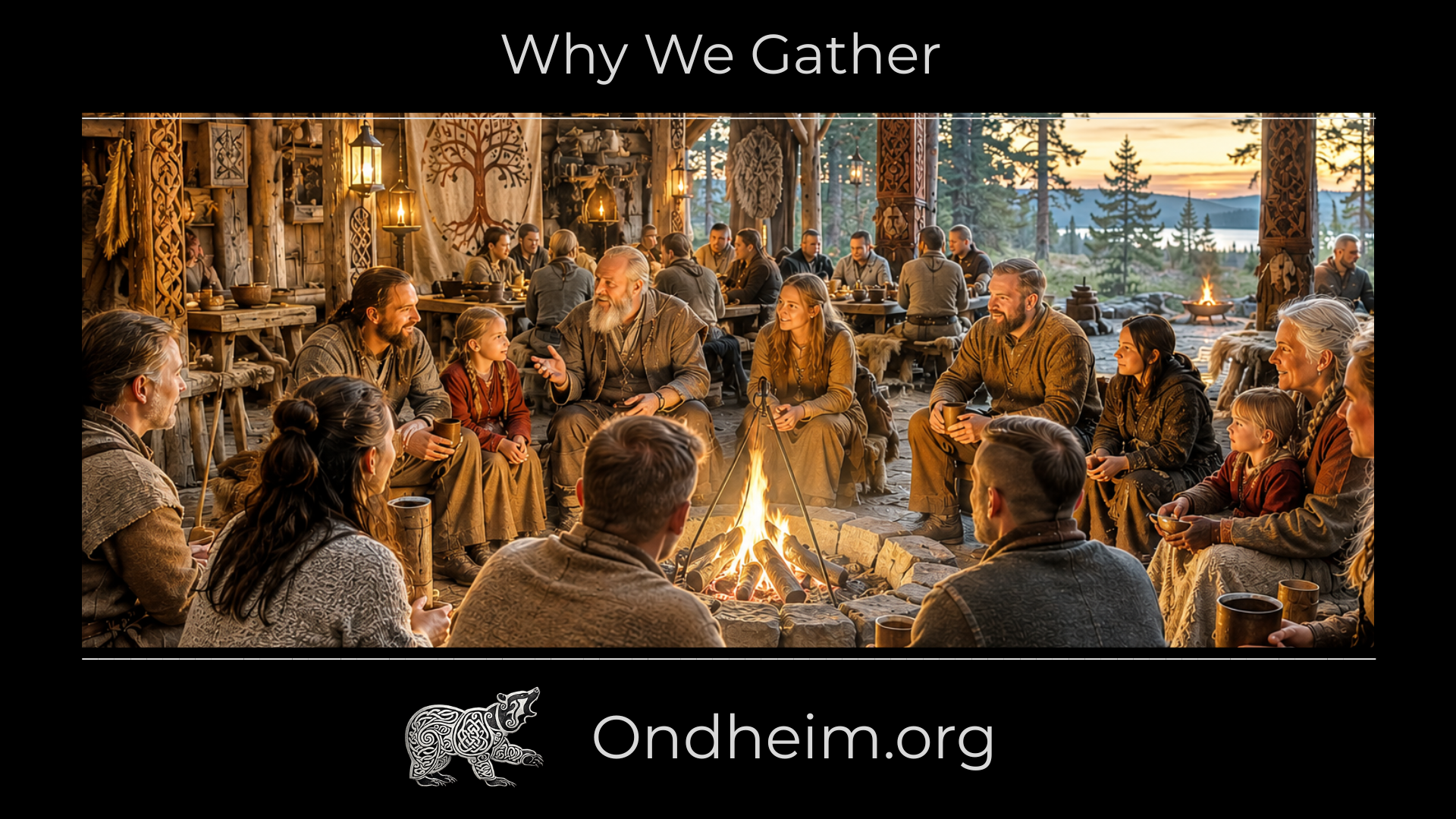
Symbel is not casual conversation, nor merely ceremonial drinking wrapped in historical aesthetics. It is a structured communal act in which speech becomes witnessed, remembered, and socially consequential. The person speaking understands that their words now exist within the memory of the gathered folk rather than remaining private thoughts spoken into emptiness.

This changes the weight of speech considerably.

A boast spoken publicly creates expectation because others will eventually measure whether deed followed declaration. An oath creates obligation because witnesses now remember what was promised. Even a declaration of past deed invites scrutiny because reputation forms gradually through whether a person’s conduct repeatedly aligns with their own claims over time.

Within symbel, speech and accountability remain deliberately bound together.

Much of the power of symbel therefore comes not from theatrical atmosphere or mystical performance, but from something deeply human and socially practical: people speak differently when their words will later be remembered by those around them.

The surviving Germanic material preserves this understanding repeatedly. In Beowulf, boasting does not occur privately or casually. Speech takes place publicly within the gathered community where reputation, obligation, gift exchange, loyalty, and future expectation become attached to what is spoken. The significance of the speech lies not merely in the words themselves, but in the fact that the gathered folk will later remember whether the speaker proved worthy of them.

The same dynamic appears throughout the old wisdom material. In Hávamál, the reader is repeatedly warned about reckless speech, poor judgment, arrogance, and the dangers of speaking beyond one’s wisdom. The poem consistently presents restraint as a sign of maturity and understanding rather than weakness.

This restraint mattered because speech revealed character.

A person speaking carelessly often exposed far more about themselves than they intended. Ambition without discipline, confidence without substance, and pride unsupported by deed all eventually became visible once words were tested against reality over time.

For this reason, the older traditions did not encourage endless declaration for its own sake. Not every ambition required boasting. Not every emotion required public expression. Not every desire deserved an oath. Within symbel especially, speech ceased to be disposable because the speaker knowingly placed themselves beneath the observation and memory of the community itself.

This is particularly important for those who have not yet established strong reputation through years of visible conduct. Their boasts receive greater scrutiny. Their declarations carry greater uncertainty. Their restraint often speaks more clearly than exaggerated claims ever could.

This should not be mistaken for hostility or exclusion.

The purpose is discernment.

A lasting community must understand who can be relied upon once hardship, obligation, or consequence arrives. Symbel contributes directly to this process because it creates an environment where speech and accountability remain connected rather than separated from one another.

The individual reveals themselves gradually through what they choose to say, what they avoid saying, and whether later conduct ultimately supports their own words.

This becomes especially important where oaths are concerned.

An oath spoken privately may carry personal meaning, but an oath spoken within symbel becomes socially remembered obligation. The one swearing the oath understands that fulfillment or failure will eventually become visible to the gathered folk surrounding them.

This transforms speech into future burden.

The burden itself is what gives the words lasting weight, because the speaker has willingly allowed others to remember and later judge whether deed matched declaration.

Within modern culture, many people seek recognition primarily through self-announcement. They attempt to declare themselves into worth through identity, performance, or endless public expression. The older worldview approached reputation differently. Worth was not established primarily through declaration, but through repeated conduct observed over time within the community itself.

Eventually exaggerated boasting collapses beneath reality. False promises weaken trust. Empty declarations erode standing.

Meanwhile, those whose conduct consistently supports their words rarely need to speak loudly for long.

This understanding also explains why destructive speech was viewed so seriously within communal gathering. In Lokasenna, the breakdown of restraint within the hall turns speech corrosive. Accusation, insult, humiliation, and boundary violation begin destabilizing the relationships surrounding the gathering itself. The poem preserves an important warning: speech capable of strengthening communal bonds can also damage frith when used recklessly or maliciously.

The older traditions therefore understood that words do not remain isolated from consequence.

Speech shapes trust. Trust shapes reputation. Reputation shapes relationship. And relationship ultimately shapes the stability of the folk itself.

At its best, symbel strengthens communal bonds, honors gods and ancestors, preserves memory, reinforces frith, and creates continuity between generations. Children sitting quietly within the gathering absorb this understanding long before they can fully articulate it themselves. They learn gradually that words spoken publicly matter, that promises create expectation, and that reputation forms slowly through repeated conduct witnessed across years of communal life.

Like much within the older worldview, symbel teaches not merely through formal instruction, but through repeated lived participation within the community itself.

Within Ondheim, symbel remains important for exactly this reason. In a world increasingly detached from accountability, memory, and enduring obligation, symbel restores consequence to speech. It reminds the folk that words should not exist separately from action, and that declarations made before witnesses eventually become part of the speaker’s standing whether they wish it or not.

What is spoken there does not simply disappear.

Over time, it becomes part of the memory through which the community comes to know the person who spoke.

— William Lord
Ondheim Theodish Fellowship
Ondheim.org

Frith defines the boundary, oaths bind the word, kin carry obligation, and the hall holds witness and memory. The shape of obligation gives these structure, and through symbel they are spoken into wyrd and given force.

For additional primary sources and public-domain texts related to kinship, obligation, feud, and Germanic social structure, see our Links page.
Why We Offer


Gift, Gratitude, and Right Relationship with the Holy Powers

The surviving Norse sources repeatedly preserve the idea that relationships are maintained through reciprocity. In Hávamál, friendship itself is described as something strengthened through exchange, remembrance, and continued participation rather than passive sentiment alone. One well-known passage advises:

“With gifts should friends gladden each other…”

The line is simple, but it reflects a much broader worldview. Relationships were not expected to maintain themselves automatically. Bonds between people required effort, consistency, mutual obligation, and visible acts of participation over time.

This same logic shaped the relationship between the folk and the Holy Powers.

Modern people often misunderstand offering because they approach it through assumptions inherited from very different religious and cultural frameworks. Some dismiss offering entirely as primitive superstition, imagining it as an attempt to bribe unseen forces through sacrifice or ritual payment. Others reduce it to little more than symbolism or personal psychology, treating ritual as a purely internal exercise with no relationship beyond the self.

The older worldview understood offering differently.

Offering was not primarily about purchasing favor, nor was it empty performance. It existed within a broader structure of maintained relationship between the folk and the powers surrounding them.

The Norse world did not view human beings as isolated or self-created. Survival depended upon layers of interdependence: family, tribe, land, weather, inherited knowledge, social obligation, and the labor of previous generations. A person inherited language, custom, protection, practical skill, memory, and social standing long before contributing anything of his own. Even the strongest individual still depended upon forces outside himself.

The Gods therefore were not understood merely as abstract symbols existing only within human imagination. They were viewed as real powers connected to the forces shaping existence itself: storm, fertility, wisdom, death, luck, craft, social order, victory, and the unseen patterns surrounding the lives of the folk.

To live well required maintaining right relationship not only within the human community, but within the larger structure of existence itself.

Offering existed inside that framework.

The surviving traditions preserve sacrifice and ritual exchange not as isolated acts of desperation, but as recurring acts that reinforced connection between the human and sacred worlds. Even outside observers such as Adam of Bremen recorded the centrality of sacrifice, feast, and communal ritual within Scandinavian religious life, though his perspective was that of a Christian outsider looking upon customs he did not fully share.

This is one reason the old phrase “a gift for a gift” carried such importance.

Modern readers sometimes misunderstand the phrase as though the Gods were imagined as machines dispensing blessings in direct exchange for ritual payment. That was never the older understanding. Sacrifice did not compel divine action, nor did ritual place the Holy Powers in debt to mankind.

What mattered was the relationship itself.

A simple offering given consistently and sincerely could carry greater meaning than extravagant public display performed without genuine reverence behind it. The act acknowledged dependence, gratitude, continuity, and participation within a greater order that did not begin with the individual alone.

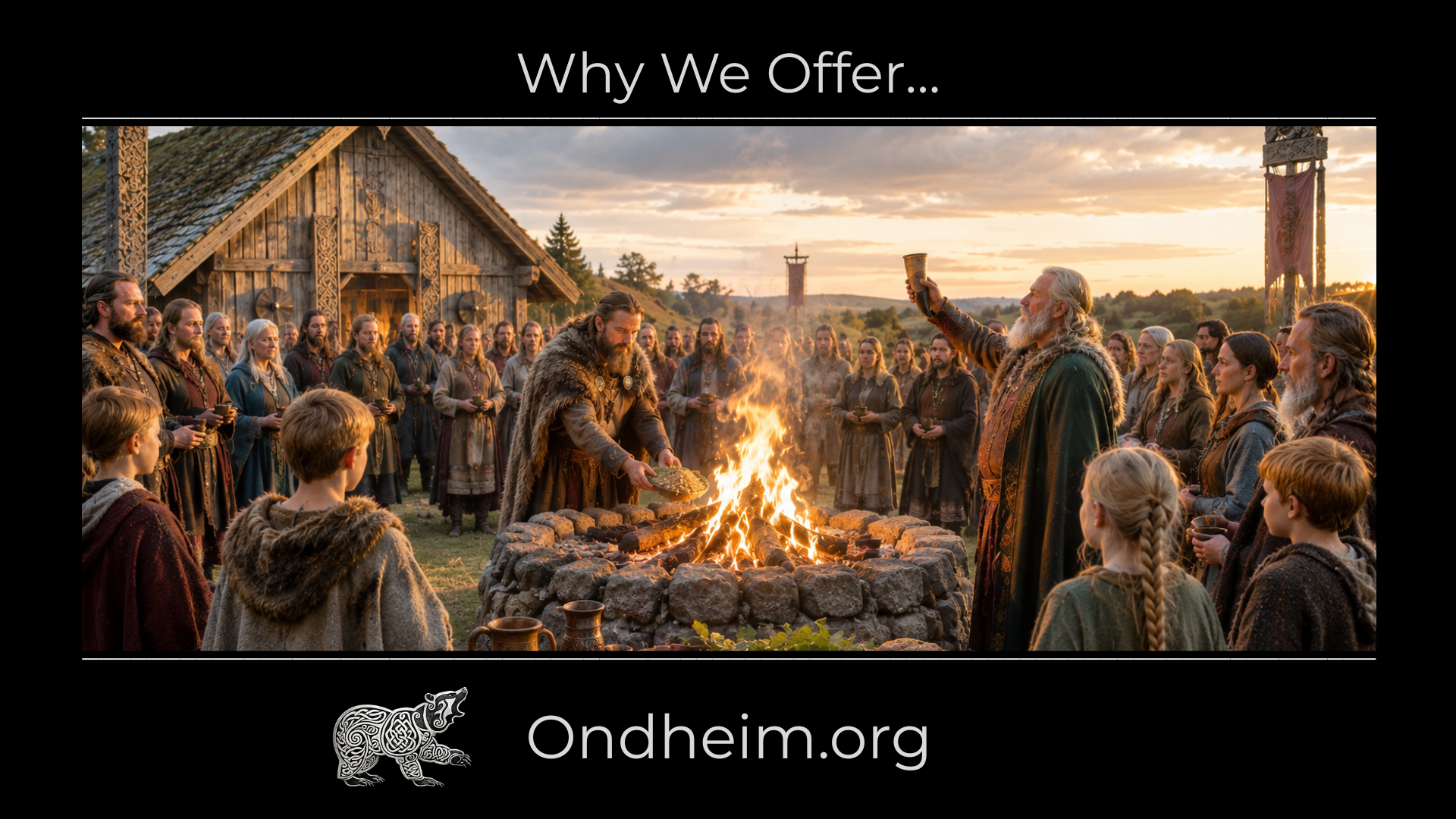
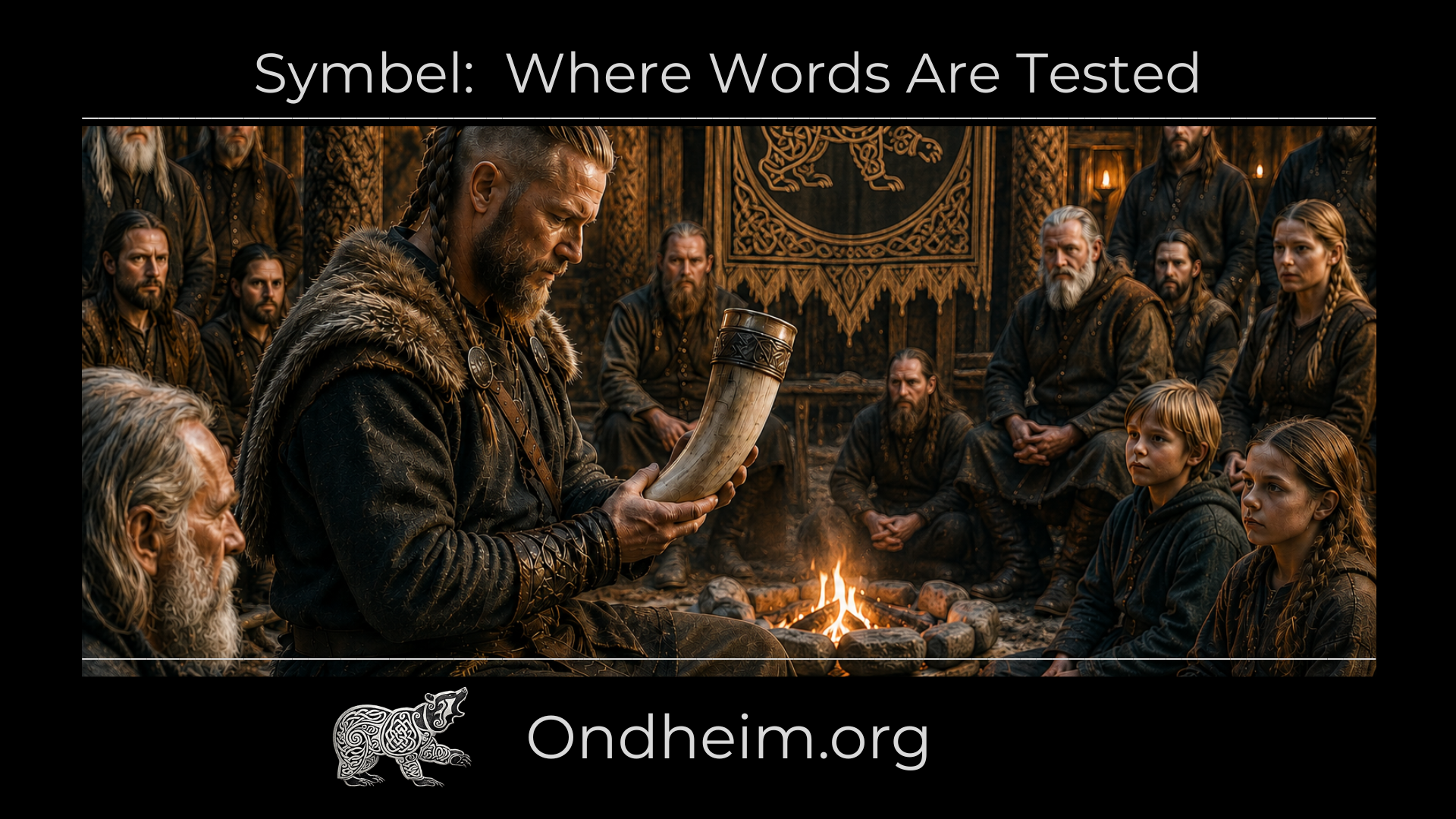
This is also why offering was rarely separated entirely from communal life within the older traditions. Feasts, blóts, shared drink, seasonal rites, oath-taking, sacrifice, and remembrance existed within the same larger structure of maintained relationship. The folk gathered before the Gods together. They offered together, feasted together, and renewed the bonds connecting tribe, ancestors, land, and Holy Powers.

Offering therefore was never merely about obtaining things.

It was about maintaining alignment between the folk and the greater forces surrounding them.

This understanding also explains why neglect carried danger within the older worldview. Relationships ignored eventually weaken. This is true between friends, between family members, between lord and follower, between the living and the dead, and between the folk and the Gods themselves. What is no longer honored slowly fades from memory. What is no longer maintained loses strength within the life of the community.

The older traditions understood that continuity requires active participation.

Offering became one expression of that participation.

This is also why gratitude carried such importance. Modern culture often encourages people to imagine themselves entirely self-made, independent, and detached from obligation beyond personal desire. The older worldview regarded this as illusion. Every life rests upon inherited foundations: the labor of ancestors, the protection of community, the gifts of the land, and forces beyond human control.

Offering acknowledged this reality openly.

At the same time, offering was never meant to become hollow routine or performative spirituality. Ritual separated entirely from relationship eventually loses much of its meaning. The outward act matters, but the sincerity and consistency beneath the act matter more.

This is one reason continuity carried such importance within many older ritual structures. Relationship is not built through isolated moments alone. It is maintained over time through remembrance, gathering, sacrifice, feast, gratitude, and continued participation in the bonds connecting the folk to the Holy Powers.

The offering itself therefore becomes more than the object placed upon the altar or cast into the fire.

It becomes recognition of place within a larger order of existence.

The folk give because they recognize they have already received.

And through continued offering, relationship remains living rather than forgotten.

— William Lord
Ondheim Theodish Fellowship
Ondheim.org

Frith defines the boundary, oaths bind the word, kin carry obligation, and the hall holds witness and memory. The shape of obligation gives these structure, and through symbel they are spoken into wyrd and given force.

For additional primary sources and public-domain texts related to kinship, obligation, feud, and Germanic social structure, see our Links page.